

Melatonin Strips vs Melatonin Gummies: What Changes When the Dose Dissolves on Your Tongue

A melatonin strip carries a measured dose on a thin film that dissolves on the tongue in 7 to 30 seconds, while a melatonin gummy is a sweet you chew and swallow, so its melatonin travels through digestion and the liver before it reaches circulation. Smart Strips built Z-z-Zen around 1 mg of melatonin plus saffron, L-glycine and L-theanine, because the people who reach for it rarely struggle with the first ten minutes in bed. Their problem is 4 a.m.
01
What is the difference between melatonin strips and melatonin gummies?
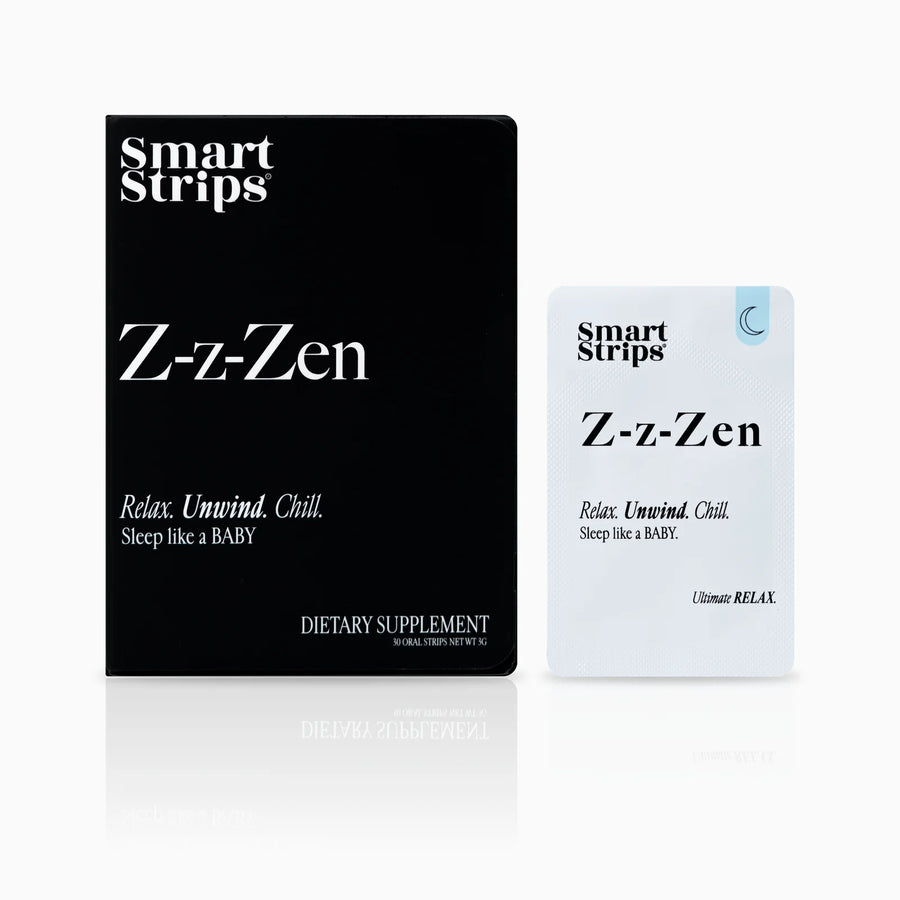
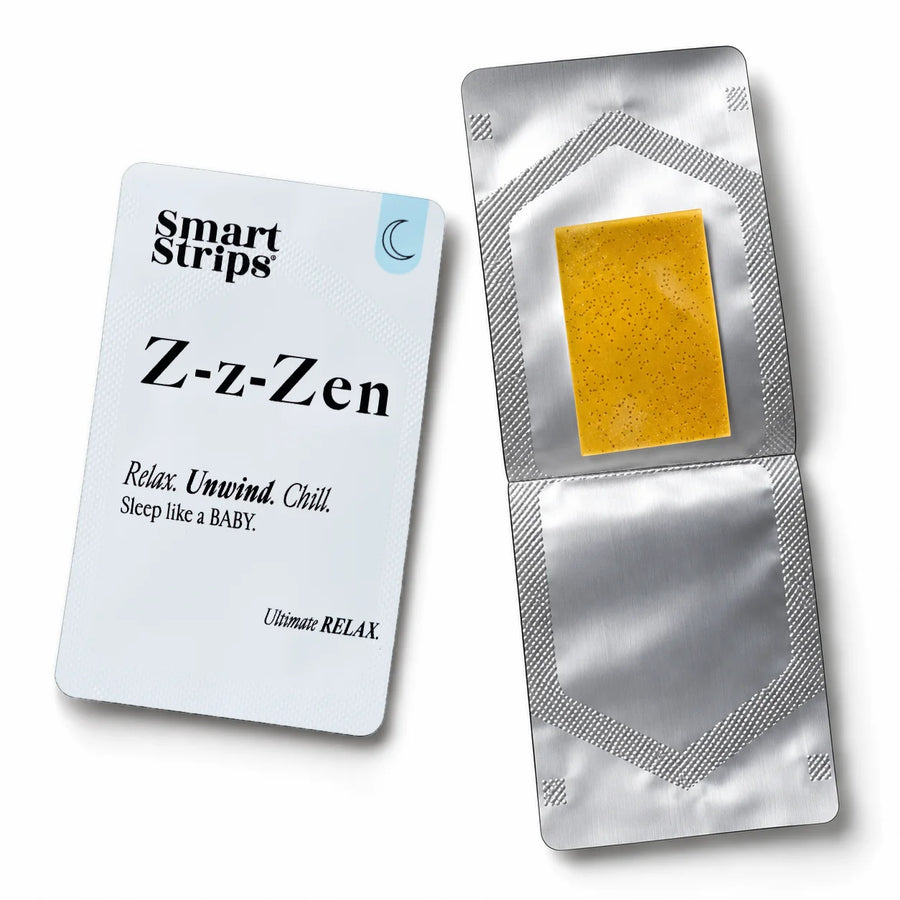
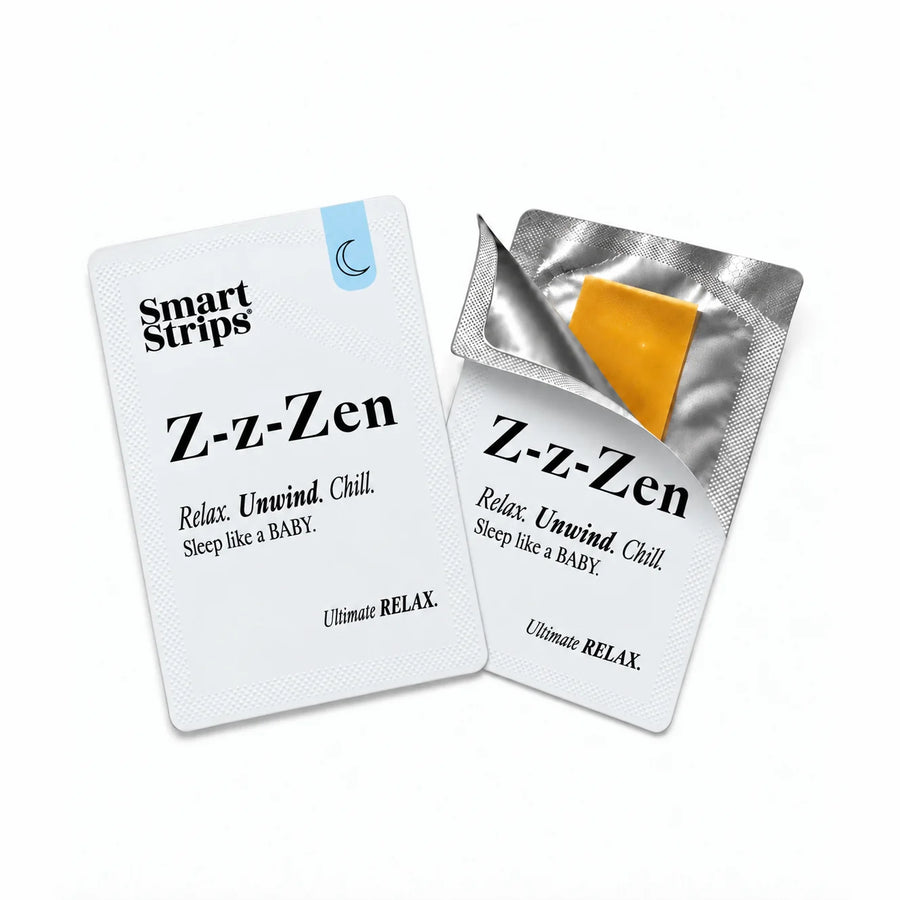
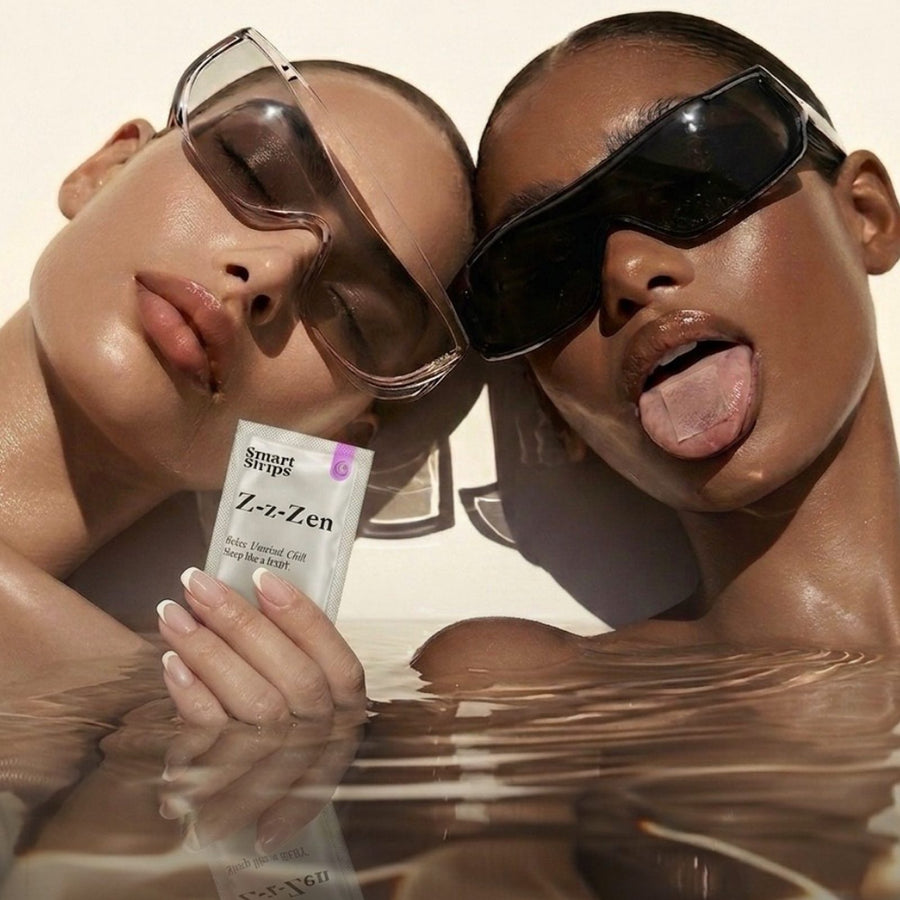
The difference is the route the dose takes. A gummy is food: you chew it, swallow it, and the melatonin is absorbed in the gut, then passes through the liver, where much of it is broken down before it does anything. A Smart Strips oral dissolvable strip sits on the tongue, softens and disappears in 7 to 30 seconds, and part of the dose is absorbed through the lining of the mouth. For that part, first-pass liver metabolism is significantly reduced.
The second difference is what comes with the dose. Gummies are confectionery, with a gelling agent, a sweetener and flavour built around a small amount of active ingredient. A strip is a pullulan film designed to carry its ingredients and dissolve.
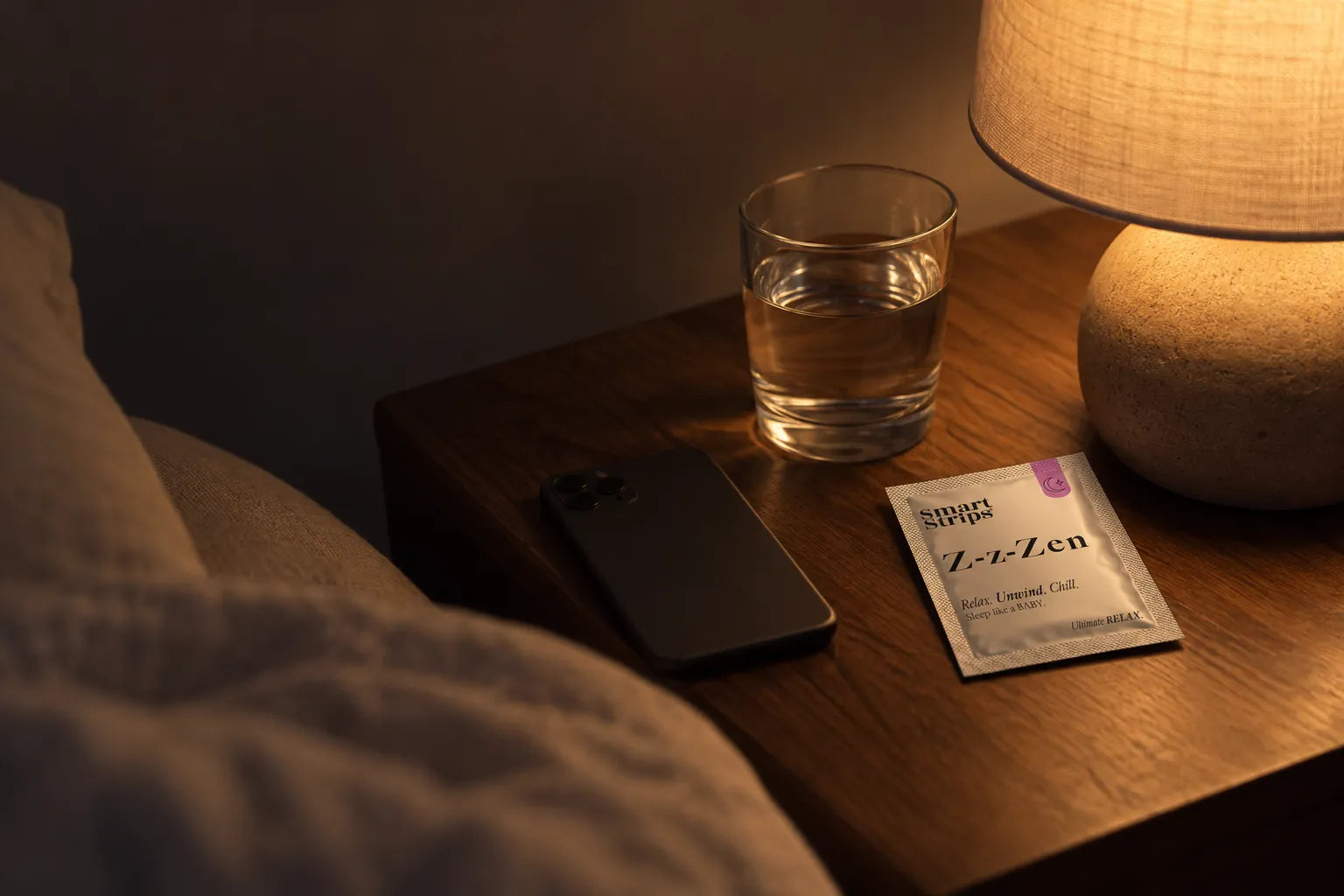
The third is portability. Each Z-z-Zen strip sits in its own light, compact sachet that slips into a pocket or a carry-on. A hotel room in another time zone, a night flight, a sofa bed at your parents’ house: the strip goes where you go, without a jar.
02
Why does the melatonin dose matter?
Because the European Union ties its authorised sleep-onset claim for melatonin to a specific amount. The wording is fixed: “Melatonin contributes to the reduction of time taken to fall asleep.” The condition is equally precise: the beneficial effect is obtained by consuming 1 mg of melatonin close to bedtime (Regulation (EU) No 432/2012).
Z-z-Zen contains 1 mg of melatonin per strip. That is a deliberate choice. Many sleep products on shelves list several times that amount, and a bigger number on the label tends to read as a stronger product. Research shows that small amounts already register: in a controlled study of adults over 50, a dose as low as 0.3 mg taken before bedtime improved sleep (Zhdanova et al., 2001). Gummies, meanwhile, sit all over the scale. In one US analysis, the melatonin measured per serving ranged from 1.3 mg to 13.1 mg (Cohen et al., 2023).
A 1 mg dose is the amount the authorised claim was built around. It is also a dose you can reason about, which brings us to the gummy problem.
03
How much melatonin is actually in a gummy?
Often not what the label says. An independent laboratory analysis of 25 melatonin gummy products sold in the US found that the actual melatonin content ranged from 74% to 347% of the amount stated on the label, and 22 of the 25 products were inaccurately labelled (Cohen et al., JAMA, 2023).
There are reasons the format is prone to this. A gummy is made by mixing a tiny amount of active ingredient into a large batch of hot, sweet gel, then pouring it into moulds. Keeping that amount even across thousands of pieces is hard, and the consumer testing organisation ConsumerLab says it finds “more problems with candy-like supplements such as gummies than with traditional forms”. By weight, the gummy itself is mostly sugars and gelatin or pectin.
A strip is produced as a film and cut into identical pieces, each one sealed in its own sachet. You take one strip and you know which dose you are taking.
04
What happens to melatonin you swallow?
Most of it never reaches the systemic circulation. A pharmacokinetic study found that 2 mg and 4 mg melatonin tablets showed an absolute bioavailability of approximately 15% (DeMuro et al., Journal of Clinical Pharmacology, 2000), and a systematic review reports a range of 9 to 33% for oral melatonin (Harpsøe et al., 2015). The rest is lost on the way, largely to metabolism in the liver.
The lining of the mouth offers a different route. Under the tongue it is only 100 to 200 µm thick (Hua, Frontiers in Pharmacology, 2019), and the lining of the mouth as a whole has been described as “4-4000 times more permeable than that of skin” (Patel et al., 2011). What is absorbed there reaches the circulation without first passing through the liver. In medicines, this matters a great deal for some molecules: one medicine given under the tongue has a bioavailability of 35%, against less than 2% when the same molecule is swallowed (SAPHRIS prescribing information). Some of every strip is still swallowed with saliva, which is why we describe the effect as a reduction in first-pass metabolism, never as avoiding the liver completely.
Thin does not mean weak. In clinical studies of several medicines, an oral film delivered the same amount of active ingredient as the matching tablet (Radicioni et al., 2017; Park et al., 2018). Smart Strips describes what the strip format adds over a swallowed tablet with three figures: up to 95% bioavailability, up to 4x faster absorption and up to 30% higher effectiveness.
05
How long does melatonin take to work as a strip versus a gummy?
Swallowed melatonin has to be released from the gummy, absorbed in the gut and processed before blood levels peak. For oral melatonin, a systematic review puts the time to peak at approximately 50 minutes (Harpsøe et al., 2015). Under the tongue the timeline can be shorter: in 13 healthy men, a 1 mg melatonin spray reached peak blood levels at 23.3 minutes on average, against 64.2 minutes for a 1.9 mg prolonged-release tablet (Ait Abdellah et al., 2023). That comparison was with a slow-release tablet, and a spray is a different format, so it shows what the route allows rather than a figure for Z-z-Zen.
In practice, the timing advice for both formats is the same as the EU claim: take your melatonin close to bedtime. The strip makes that easy to do with precision, because there is no glass of water, no chewing and nothing to finish. You place it on your tongue with the lights already low.
06
Is the sugar in melatonin gummies a problem?
For one gummy on one night, it is a small amount: ConsumerLab puts it at about 2 grams of sugar per gummy. As a nightly habit, it adds up, and it lands at a particular moment: after you have brushed your teeth, right before a long night’s sleep. Gummies are confectionery by design, usually built on sugar or glucose syrup, and they stick to teeth.
A strip is a thin film rather than a sweet. For the full list of other ingredients, see the Supplement Facts panel on the Z-z-Zen box. The strip contains no sugar: it is sweetened with stevia and flavoured with natural peppermint.
07
Why is Z-z-Zen more than a melatonin strip?
Because melatonin is the smallest ingredient in it. Z-z-Zen combines four ingredients in each oral dissolvable strip:
- 14 mgSaffron extract
- 12 mgL-Glycine
- 12 mgL-Theanine
- 1 mgMelatonin
The formula is built in two halves. Melatonin and saffron are there for the moment you lie down; L-theanine and L-glycine were chosen with the rest of the night in mind. The 14 mg of saffron extract matches the lower of two doses tested in a randomised, placebo-controlled study of an evening saffron extract and sleep quality in 120 adults with poor sleep (Lopresti et al., Sleep Medicine, 2021). Glycine is an amino acid that research has looked at before bedtime, at gram doses far above the 12 mg in a strip (Yamadera et al., 2007). L-theanine, the amino acid found in tea, has also been studied in healthy adults at much higher daily doses (Hidese et al., 2019). In Z-z-Zen, both amino acids are part of a four-ingredient evening formula rather than single actives.
The 4 a.m. wake-up
You fall asleep at eleven without much trouble. Then, at a few minutes past four, you are awake. No noise, no reason. Within a minute the mind has opened the calendar: the presentation, the supplier who has not paid, the call with the school, the thing you forgot to reply to on Friday. By five you are negotiating with yourself about whether it is worth trying again.
This is the person Z-z-Zen was designed for. Most melatonin products are built around falling asleep. Z-z-Zen is built around falling asleep and staying asleep through the night, which is the part that decides how you feel at nine the next morning.
08
Melatonin strips vs melatonin gummies: side by side
| Z-z-Zen oral dissolvable strip | Typical melatonin gummy | |
|---|---|---|
| How you take it | On the tongue, dissolves in 7 to 30 seconds | Chewed and swallowed |
| Melatonin per dose | 1 mg, the amount in the EU authorised claim | Varies by product; one US analysis measured 1.3 to 13.1 mg per serving (Cohen, 2023) |
| Absorption route | Part of the dose through the lining of the mouth | Gut, then liver |
| Swallowed melatonin bioavailability | Reduced first-pass for the portion absorbed in the mouth | Approximately 15% for swallowed oral melatonin (DeMuro, 2000) |
| Dose consistency | Each strip cut from one film and sealed individually | One US analysis found 74% to 347% of the label amount (Cohen, 2023) |
| Other ingredients for sleep | Saffron 14 mg, L-glycine 12 mg, L-theanine 12 mg | Usually melatonin alone, sometimes with herbs |
| Base | Pullulan film | Sugar or glucose syrup, gelatin or pectin |
| Travel | Light, compact sachet, goes in any bag | Jar or pouch |
09
Who should not take melatonin strips?
Melatonin is a supplement for adults. Please read these before your first strip:
- Pregnancy and breastfeeding: do not use Z-z-Zen without speaking to your doctor first.
- Children and teenagers: Z-z-Zen is not intended for anyone under 18.
- Driving and machinery: take it only when you are going to bed, and do not drive or operate machinery after taking it.
- Alcohol and sedatives: do not combine with alcohol or sleep medication.
- Medication and health conditions: consult your doctor if you are pregnant, nursing, taking medication or have a medical condition. If poor sleep continues for several weeks, a doctor is the right next step.
Do not exceed the recommended daily intake. Food supplements are not a substitute for a varied, balanced diet and a healthy lifestyle.
10
How to use Z-z-Zen
Take one strip from its sachet 30 minutes before bed, with dry hands. Place it on your tongue and let it dissolve, which takes 7 to 30 seconds. No water needed. One strip a day.
Taking out the strip and placing it on your tongue takes about seven seconds; that is what we call the 7-second ritual. Put the phone face down afterwards. A lit screen at that hour works against the calm you are after.
If you are comparing other formats too, our page on caffeine strips vs pre-workout powder looks at the same question from the other end of the day.

11
FAQ
Are melatonin strips better than gummies?
They are a different format. A strip dissolves on the tongue in 7 to 30 seconds and part of its dose is absorbed through the lining of the mouth; a gummy is swallowed and goes through digestion and the liver. Strips also contain no gummy base.
How much melatonin is in Z-z-Zen?
1 mg per strip, alongside saffron extract 14 mg, L-glycine 12 mg and L-theanine 12 mg. Melatonin contributes to the reduction of time taken to fall asleep; the beneficial effect is obtained by consuming 1 mg of melatonin close to bedtime.
How fast does a melatonin strip dissolve?
In 7 to 30 seconds on the tongue, without water.
What is the bioavailability of swallowed melatonin?
A pharmacokinetic study found an absolute bioavailability of approximately 15% for oral melatonin tablets at 2 mg and 4 mg (DeMuro et al., 2000). A systematic review reports a range of 9 to 33% (Harpsøe et al., 2015).
Can children take melatonin strips?
No. Z-z-Zen is formulated for adults and is not intended for anyone under 18.
Is Z-z-Zen the same as sleep strips for snoring?
No. Strips for snoring are adhesive tapes or nasal strips applied to the skin. Z-z-Zen is an oral dissolvable strip, a food supplement that dissolves on the tongue.
When 4 a.m. has become a habit, Z-z-Zen is a quiet place to start.
12
Sources
- Commission Regulation (EU) No 432/2012 establishing a list of permitted health claims made on foods, Annex (melatonin entries). https://www.legislation.gov.uk/eur/2012/432/annex; Bulgarian text: https://eur-lex.europa.eu/legal-content/BG/TXT/HTML/?uri=CELEX:32012R0432
- Zhdanova IV, Wurtman RJ, Regan MM, Taylor JA, Shi JP, Leclair OU. Melatonin treatment for age-related insomnia. J Clin Endocrinol Metab. 2001;86(10):4727-4730.
- Cohen PA, Avula B, Wang YH, Katragunta K, Khan I. Quantity of Melatonin and CBD in Melatonin Gummies Sold in the US. JAMA. 2023;329(16):1401-1402. DOI 10.1001/jama.2023.2296
- ConsumerLab. Is there a cause for concern with gummy vitamins? https://www.consumerlab.com/answers/is-there-a-cause-for-concern-with-gummy-vitamins/gummy_vitamin_concern
- DeMuro RL, Nafziger AN, Blask DE, Menhinick AM, Bertino JS. The absolute bioavailability of oral melatonin. J Clin Pharmacol. 2000;40(7):781-784. DOI 10.1177/00912700022009422
- Harpsøe NG, Andersen LPH, Gögenur I, Rosenberg J. Clinical pharmacokinetics of melatonin: a systematic review. Eur J Clin Pharmacol. 2015;71(8):901-909. DOI 10.1007/s00228-015-1873-4
- Hua S. Advances in nanoparticulate drug delivery approaches for sublingual and buccal administration. Front Pharmacol. 2019;10:1328. DOI 10.3389/fphar.2019.01328
- Patel VF, Liu F, Brown MB. Advances in oral transmucosal drug delivery. J Control Release. 2011;153(2):106-116. DOI 10.1016/j.jconrel.2011.01.027
- SAPHRIS (asenapine) sublingual tablets, US Prescribing Information, clinical pharmacology. https://medlibrary.org/lib/rx/meds/saphris-1/page/6/
- Radicioni M, Castiglioni C, Giori A, Cupone I, Frangione V, Rovati S. Bioequivalence study of a new sildenafil 100 mg orodispersible film compared to the conventional film-coated 100 mg tablet administered to healthy male volunteers. Drug Des Devel Ther. 2017;11:1183-1192. DOI 10.2147/DDDT.S124034
- Park S-I, Heo S-H, Kim G, et al. Comparison of tadalafil pharmacokinetics after administration of a new orodispersible film versus a film-coated tablet. Drug Des Devel Ther. 2018;12:935-942. DOI 10.2147/DDDT.S155040
- Ait Abdellah S, Raverot V, Gal C, et al. Bioavailability of melatonin after administration of an oral prolonged-release tablet and an immediate-release sublingual spray in healthy male volunteers. Drugs R D. 2023;23(3):257-265. DOI 10.1007/s40268-023-00431-9
- Lopresti AL, Smith SJ, Drummond PD. An investigation into an evening intake of a saffron extract (affron) on sleep quality, cortisol, and melatonin concentrations in adults with poor sleep: a randomised, double-blind, placebo-controlled, multi-dose study. Sleep Med. 2021;86:7-18. DOI 10.1016/j.sleep.2021.08.001
- Yamadera W, Inagawa K, Chiba S, et al. Glycine ingestion improves subjective sleep quality in human volunteers, correlating with polysomnographic changes. Sleep Biol Rhythms. 2007;5:126-131. DOI 10.1111/j.1479-8425.2007.00262.x
- Hidese S, Ogawa S, Ota M, Ishida I, Yasukawa Z, Ozeki M, Kunugi H. Effects of L-theanine administration on stress-related symptoms and cognitive functions in healthy adults: a randomized controlled trial. Nutrients. 2019;11(10):2362. DOI 10.3390/nu11102362
7 to 30s
To dissolve on the tongue
8×5cm
Sachet, business card size
30
Strips, one month
10
Formulas, one format